
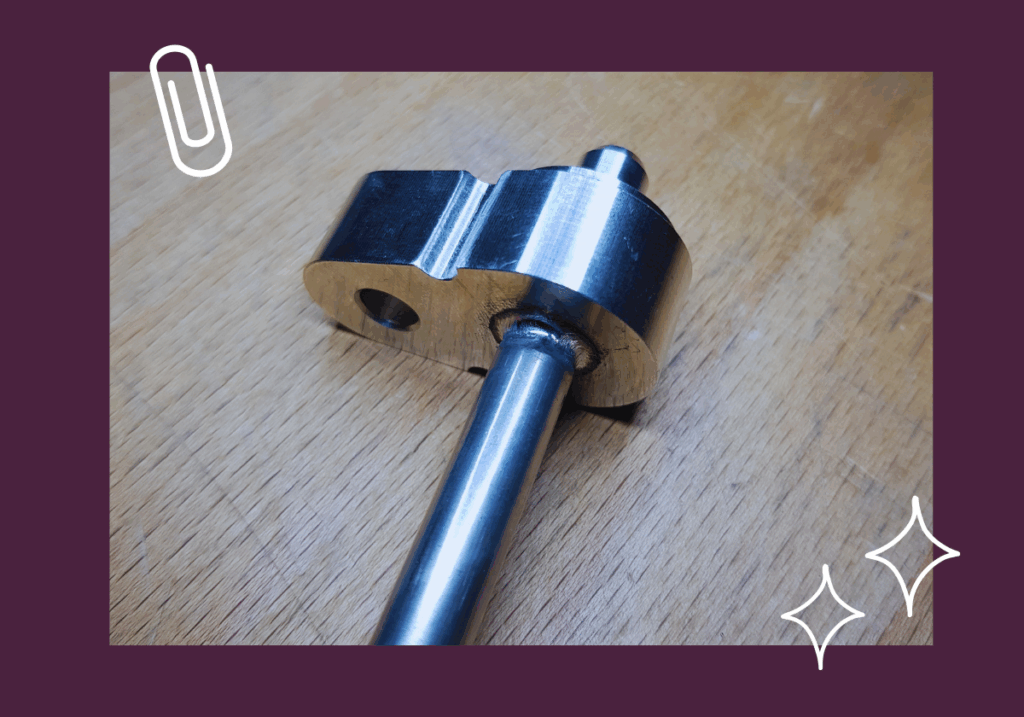
The use of aluminum and its alloys has become a standard for manufacturers seeking to combine lightness and mechanical strength. However, this material presents complex physical challenges during assembly. Its high thermal conductivity and natural reflectivity mean that conventional welding methods are sometimes imprecise or deformation-inducing. Precision laser welding has emerged as the technological solution for guaranteeing robust, aesthetically pleasing joints, provided that the interaction between the beam and the material is perfectly controlled.
The technical challenges of reflectivity and conductivity
One of the main obstacles to welding aluminum is its ability to reflect a large proportion of the incident radiation. To pierce this optical “barrier” and create a stable keyhole, the laser must deliver an extremely high power density from the very first milliseconds. Once fusion has begun, the heat dissipates very rapidly in the part. This characteristic calls for rigorous thermal control to avoid excessively large heat-affected zones (HAZ), which could weaken the metal’s mechanical properties.
Unlike traditional processes such as TIG or MIG, laser welding concentrates energy on a very narrow zone. This precision limits residual deformation on thin-walled machined parts. To find out how this technology can be adapted to other contexts, take a look at our various welding applications in industry.
Prevent the risk of cracking and porosity
Aluminium welding is susceptible to two major defects: hot cracking and the appearance of porosities. The latter is often caused by hydrogen entrapment or steam capillary collapse during solidification. To counter these phenomena, the use of optimized welding parameters, such as power modulation or the choice of a suitable shielding gas, is essential.
The chemical composition of the alloy also plays a decisive role. Certain aluminum series (such as the 6000 series) sometimes require the addition of a specific filler metal to stabilize the molten bath and guarantee a crack-free weld. This technical expertise is at the heart of our approach to guaranteeing the quality of a laser weld on every project.
An aesthetic finish for high-value-added parts
In addition to solidity, the industrial sector increasingly demands clean weld seams requiring little or no finishing (grinding, polishing). The laser produces fine, even welds, ideal for electronic enclosures, heat exchangers or visible structural components. Eliminating metal spatter saves precious time on the overall production line.
This ability to assemble complex shapes without degrading surface appearance is a major asset for precision machined parts. Whether for bodywork components or fluid management systems, laser welding offers a repeatability that manual processes struggle to match on medium production runs.
DOUBLE CŒUR’s expertise for your light alloys
Mastering laser machining on aluminum requires state-of-the-art equipment and solid business experience. In Alsace, DOUBLE CŒUR helps companies overcome the technological hurdles associated with this demanding material. Our approach is based on an in-depth analysis of your parts’ geometry and final mechanical constraints to define the optimum welding path.
If you’re working on projects incorporating components made using metal additive manufacturing, you should know that lasers are also the preferred tool for joining these new, complex structures to conventional foundry or machining elements.