
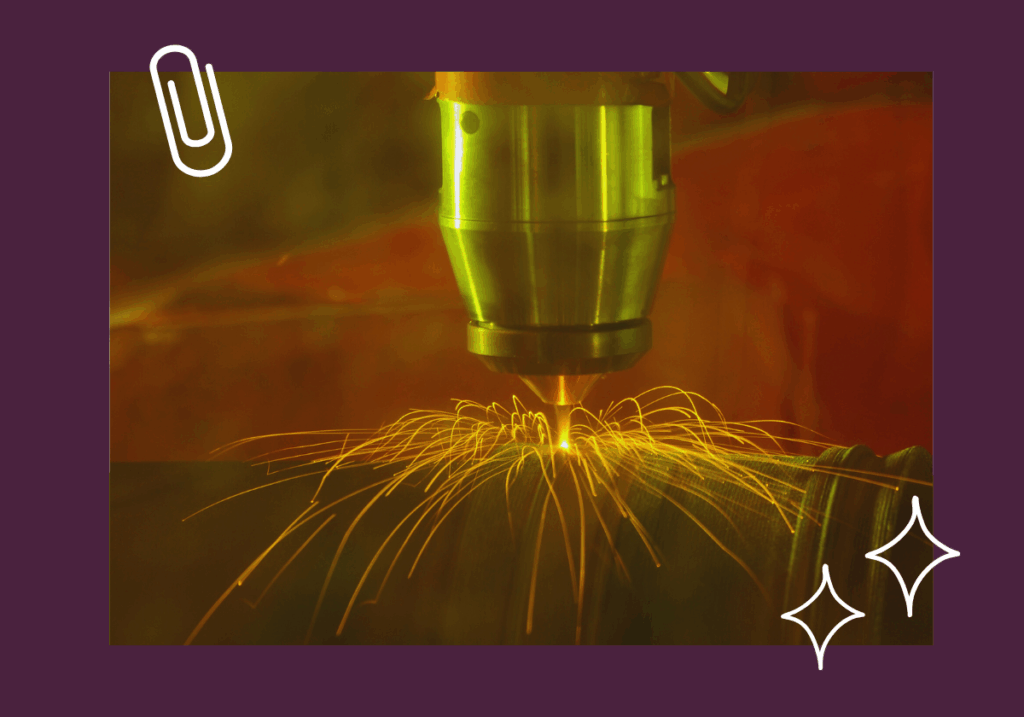
Metal additive manufacturing is now a fully-fledged industrial solution, used to design, modify or repair metal parts with a high level of precision. Long confined to prototyping, this technology is now making its mark in concrete industrial projects, when traditional processes show their limits.
But not all projects lend themselves to additive manufacturing. The choice of this technology depends on a number of criteria, such as part geometry, mechanical constraints or production objectives.
Metal additive manufacturing for the repair of industrial parts
One of the most widespread uses of metal additive manufacturing concerns the repair of industrial parts. It enables material to be added only to worn or damaged areas, without having to remanufacture the entire component.
This approach is particularly relevant for parts that are costly, complex or difficult to replace. It helps extend their service life, while keeping costs and lead times under control.
Industrial projects requiring customized parts
Metal additive manufacturing is also well suited to projects requiring customized or highly personalized parts. It can be used to produce complex geometries that are difficult or impossible to obtain by traditional machining.
This type of project is common in industrial environments, where technical constraints evolve rapidly and require specific adaptations to existing components.
Manufacture of functional prototypes and small series
In an industrial context, metal additive manufacturing is often used to produce functional prototypes. Unlike purely aesthetic prototypes, these parts can be subjected to mechanical stresses close to those encountered in real-life conditions.
It is also appropriate for small production runs, when volumes do not justify the use of heavy tooling, but quality requirements remain high.
Projects involving complex geometries
Industrial projects involving complex geometries are particularly fertile ground for metal additive manufacturing. Internal cavities, optimized shapes or lightweight structures can be integrated directly into part design.
This freedom of design allows us to optimize the mechanical performance, weight or functionality of components, according to the constraints of the project.
Metal additive manufacturing and complementarity with machining
In many industrial projects, metal additive manufacturing is used to complement machining. The part is first produced or modified by additive manufacturing, then machined to achieve final tolerances or improve surface finish.
This hybrid approach leverages the advantages of both technologies, while guaranteeing a result that meets industrial requirements.
When is metal additive manufacturing most relevant?
Industrial 3D metal printing is particularly suitable when the project involves high geometric complexity, limited volumes, targeted repairs or high customization needs.
For a detailed presentation of the associated technologies and available processes, please consult the page dedicated to metal additive manufacturing.
Assessing the relevance of additive manufacturing for an industrial project
Each industrial project has its own technical, economic and functional constraints. A feasibility analysis can determine whether metal additive manufacturing is the most suitable solution, and guide you towards the optimum process for your project objectives.