
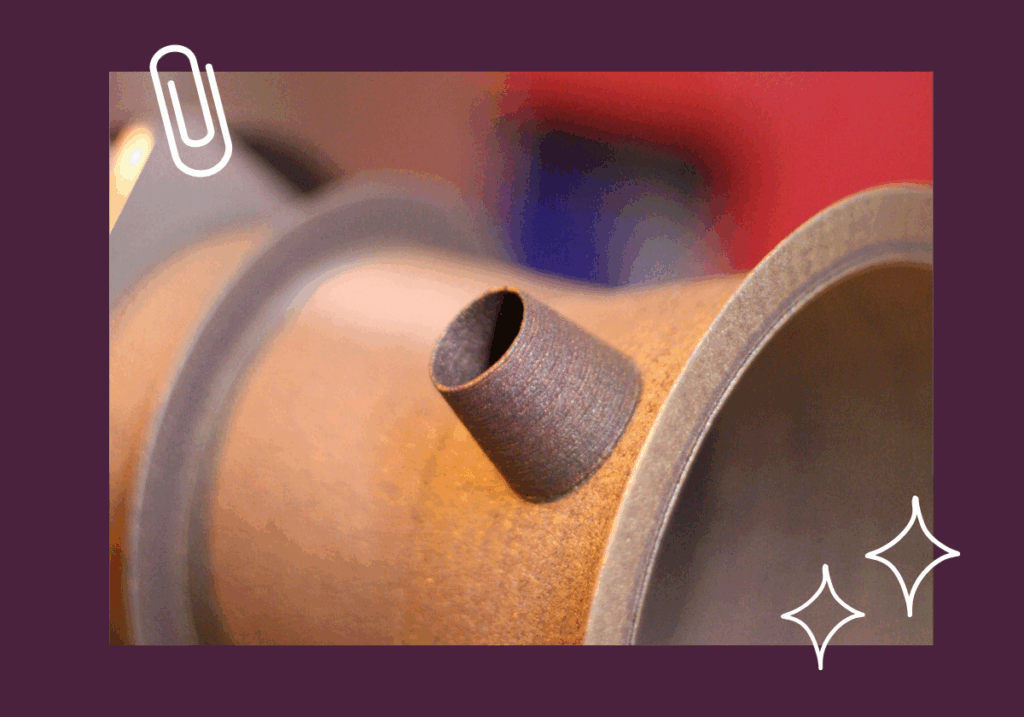
In an industrial context where asset management and equipment durability have become top priorities, corrective maintenance is taking on a new dimension. Rather than systematically replacing expensive components that have suffered wear and tear or localized damage, companies are turning to cutting-edge solutions such as additive manufacturing using directed energy deposition (DED). This laser technology not only restores machined parts to their original condition but also significantly extends their service life.
A strategic alternative to outright replacement
The cost of an industrial part is not limited to its purchase price. It includes delivery times that can sometimes be prohibitive, operational losses due to machine downtime, and the carbon footprint associated with producing a new component. DED technology offers an opportunity to salvage critical parts by adding material precisely where it is missing. By fusing metal powder using a high-power laser beam, it is possible to rebuild complex geometries on existing substrates.
This method is particularly effective for drive shafts, injection molds, and press tools. To understand the technical scope of this process, it is helpful to examine DED—its operation, advantages, and industrial applications—in order to grasp how laser melting ensures a perfect metallurgical bond with the base part.
Functional reinforcement for improved wear resistance
Beyond simple repairs, metal additive manufacturing enables preventive cladding. The idea is to apply a layer of a higher-performance material (harder or more corrosion-resistant) to a specific area of a part machined from standard steel. This combination of materials—which is difficult to achieve using traditional casting methods—enables the design of “dual-material” parts optimized for their operating environment.
By reinforcing areas subject to friction or surfaces exposed to harsh chemical environments, manufacturers extend the operational life of their machines. This approach fits perfectly within a custom metal parts manufacturing strategy, where the focus is no longer merely on manufacturing, but on improving existing components to enhance performance.
Technical expertise and compliance with safety requirements
Implementing the DED process involves the use of Class 4 lasers, which pose the highest level of risk to operators. Mastering this technology cannot be done on the fly and requires a rigorous approach to laser safety. In France, the use of such equipment requires the presence of a Laser Safety Specialist (PCSL), who is responsible for conducting risk assessments and implementing appropriate safety measures.
At DOUBLE CŒUR, this operational rigor ensures not only the technical quality of the repair but also full compliance with the Labor Code regarding exposure to artificial optical radiation.
Seamless integration into the industrial lifecycle
One of the major advantages of DED repair is its ability to be integrated after traditional machining operations. It is possible to repair a machining error on a nearly finished part, thereby avoiding the scrapping of a component that has already required dozens of hours of work. The laser’s precision limits the heat-affected zone, which preserves the overall mechanical properties of the rest of the structure.
This technological versatility is a cornerstone of modern reindustrialization in Alsace. By combining welding expertise with the flexibility of metal 3D printing, we offer factories in the region a way to secure their machine fleets while optimizing their maintenance costs.
Entrust the repair of your critical components to DOUBLE CŒUR’s DED expertise